
Before MODUS Road was a game, its story was already on our shirts.
Look closely at a MODUS culture polo and you’ll find more than a repeating logo. There are coffee cups and ping-pong paddles. Engineering tools and references to our work. Symbols of community involvement, time spent together, and the people who helped build the firm.
Those details became the starting point for MODUS Road. We took a visual expression of our culture and turned it into something people could explore—one hop, one collectible, and one small story at a time.
01 / The starting point
A shirt with a story.
The MODUS culture polo brings different parts of the firm together in a single pattern. The custom artwork speaks to engineering, everyday rituals, friendly competition, and the ways our team connects beyond a project meeting.
That mix matters. Our work is technical, but the people doing it have interests, traditions, and histories of their own. The shirt gives those things a visible place alongside the MODUS name.
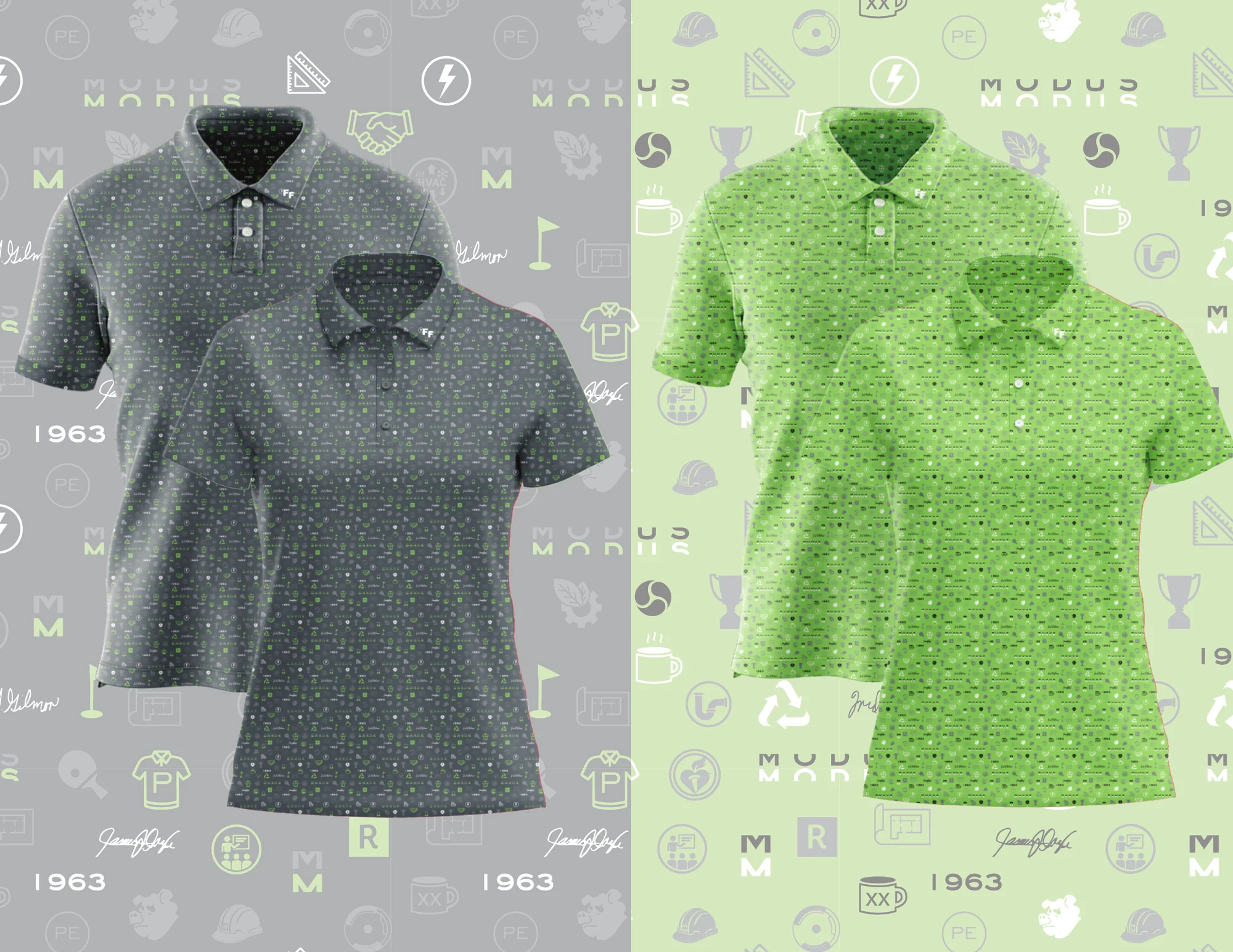
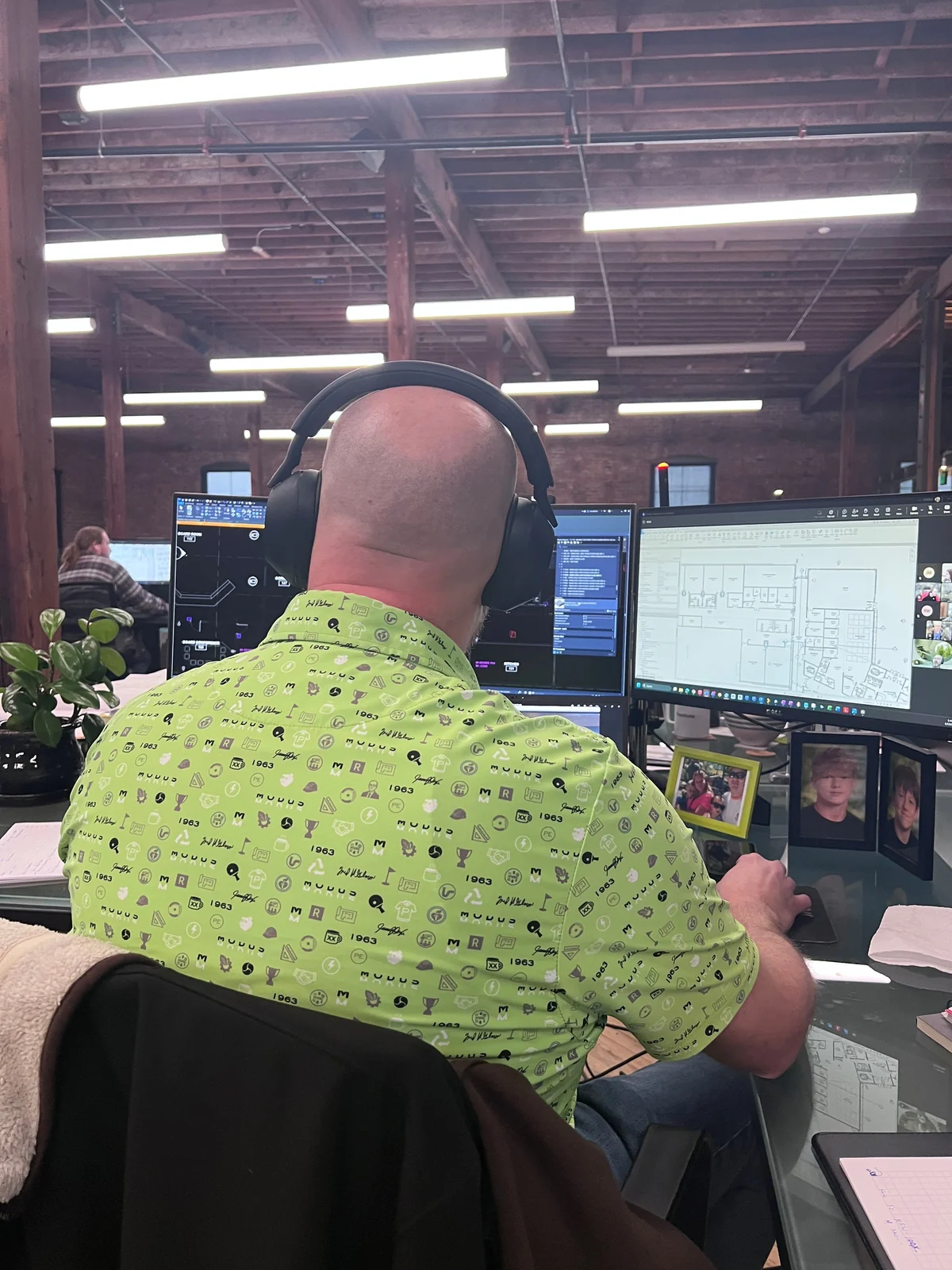
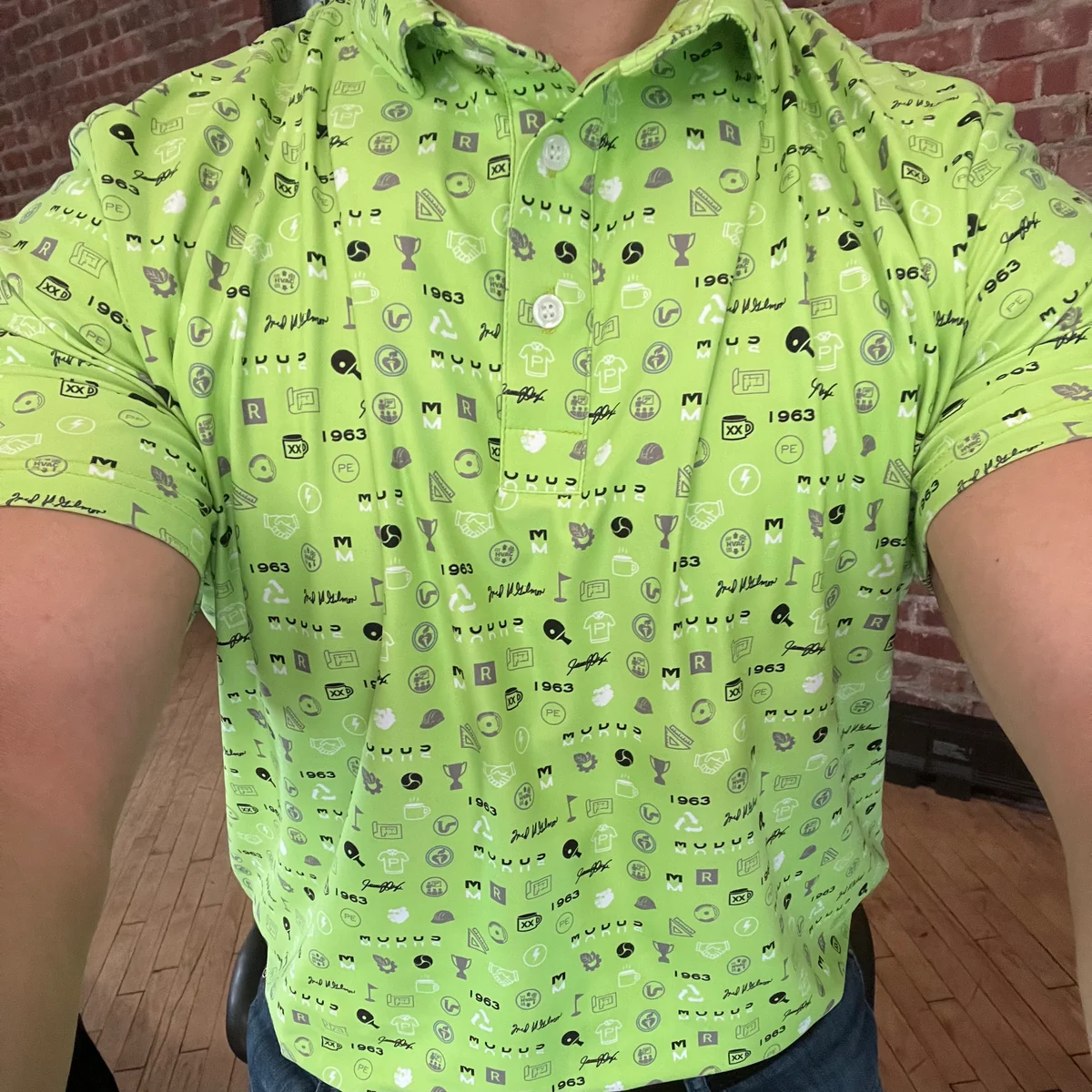
Explore the original pattern design
02 / The cultural details
Small symbols.
Real connections.
The game carries those symbols forward with short descriptions that explain what each one represents. A few examples show how the pattern tells the MODUS story.

Coffee
A familiar part of the day—and, in MODUS Road, a temporary boost that doubles points and speeds up the player’s hops.

Ping-pong
A nod to the team’s love of a game of ping-pong. Friendly competition belongs in the pattern and on the playfield.
Ductulator
A tool used to design and evaluate air distribution systems. It brings a recognizable piece of engineering into the game.

Giving back
The LifeServe symbol celebrates the blood drives MODUS hosts and participates in. That connection also extends to our engineering work on LifeServe Blood Center’s headquarters in Johnston, Iowa—bringing community involvement and our project work together.

Mentorship
A reminder of the value of connecting with peers, sharing knowledge, and helping one another grow.
1963
The year MODUS was founded. The game also includes marks for founders James Doyle and Fred Gilmor.
Explore all 25 original polo icons
The original artwork spans our work, history, community involvement, and time together. Selected symbols carry into MODUS Road as collectibles.











A personal detail
Have you found
Hidden Harry?

One detail breaks the repeat. To celebrate Harry Doyle’s retirement, the polo includes a single Hidden Harry illustration—a search-and-find tribute in the spirit of Where’s Waldo.
Unlike the recurring culture icons, Harry appears only once. Finding him turns a closer look at the shirt into a small shared experience, and gives a person’s place in MODUS history a spot in the design.
Before the pattern became part of a game, it already invited people to look, discover, and connect.
03 / From artwork to interaction
Culture becomes gameplay.
In MODUS Road, selected graphics from the polo are more than scenery. They become collectibles. Pick one up and a short card introduces its meaning while the score keeps moving.
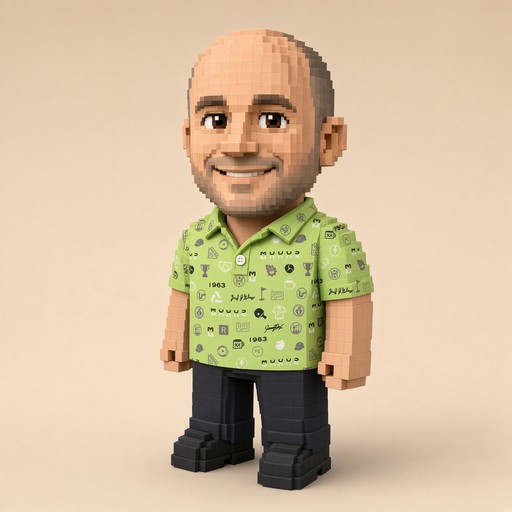
The polo makes the transition, too. MODUS characters wear the familiar lime pattern, connecting the people at the booth with the characters on screen. Players can choose a character or create their own look before entering the expo-inspired course.
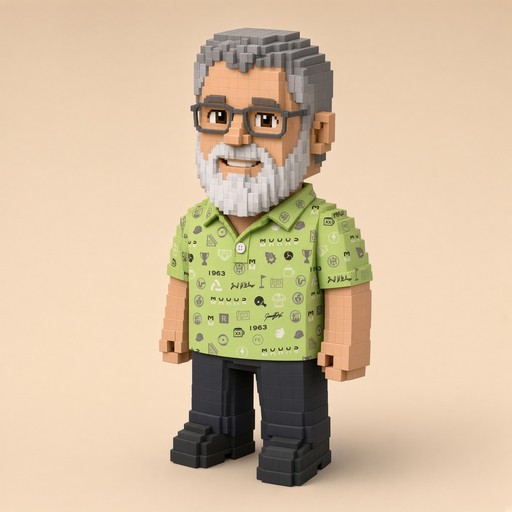
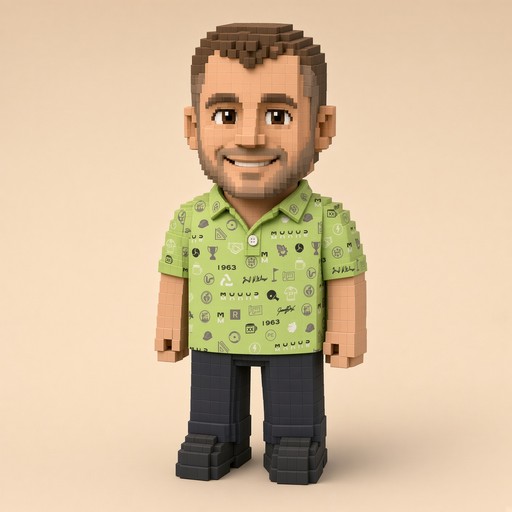
The setting borrows from the rhythm of a busy expo hall: navigate moving obstacles, collect swag, and find the MODUS booth. Coffee adds a burst of energy. Culture icons introduce the team. Even the game’s CE tokens offer a playful nod to continuing education—they are game points, not actual continuing-education credits.
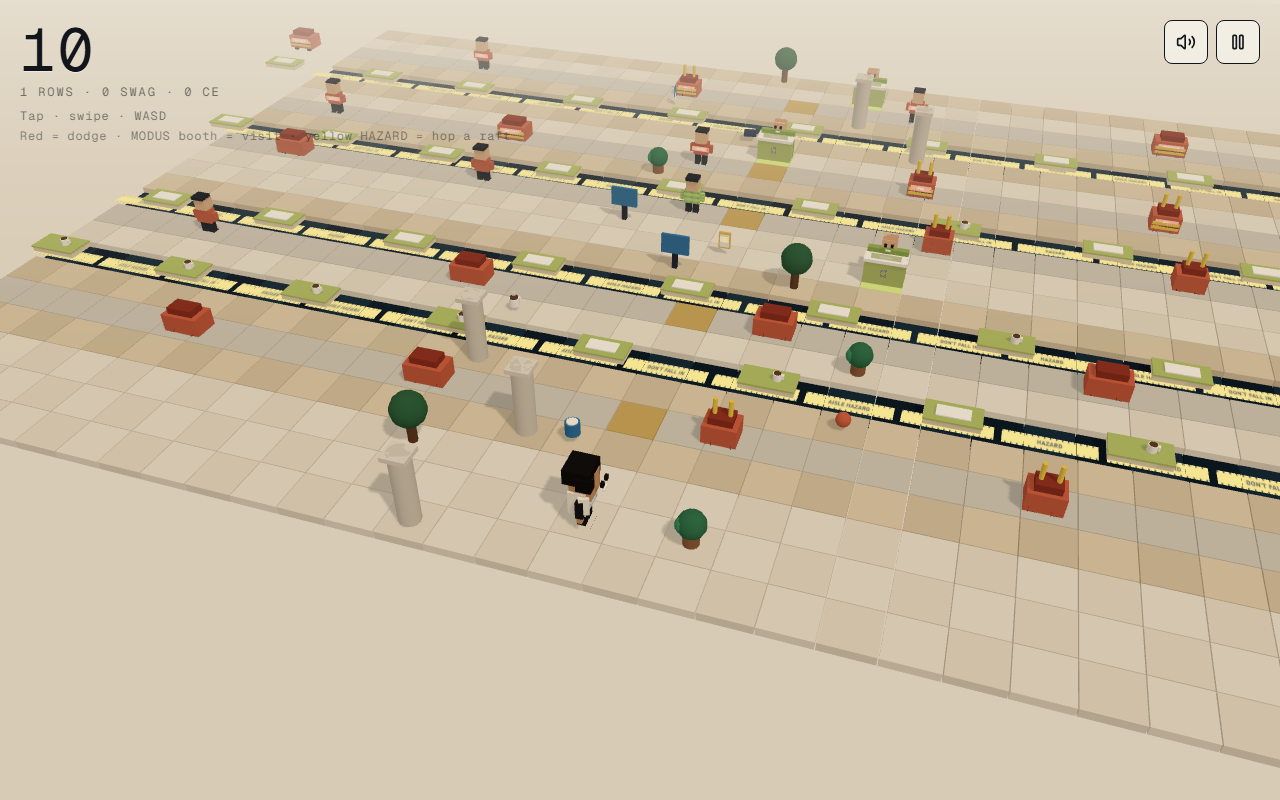
Each element gives the player something to do and something to learn. The result is a different introduction to MODUS: not a list of facts to read before playing, but small discoveries woven into the experience.
04 / The launch
From our team
to AIA Iowa.
We brought MODUS Road to AIA Iowa as a way to introduce the people behind our engineering work. The setting made the connection especially fitting: a game inspired by an expo hall, introduced within the architecture community it was built to engage.
The event version paired browser-based play with a shared leaderboard. At the booth, a portrait display showed the game, a separate monitor displayed the standings, and the central screen showcased MODUS project work. The game sat alongside the work it helped introduce.
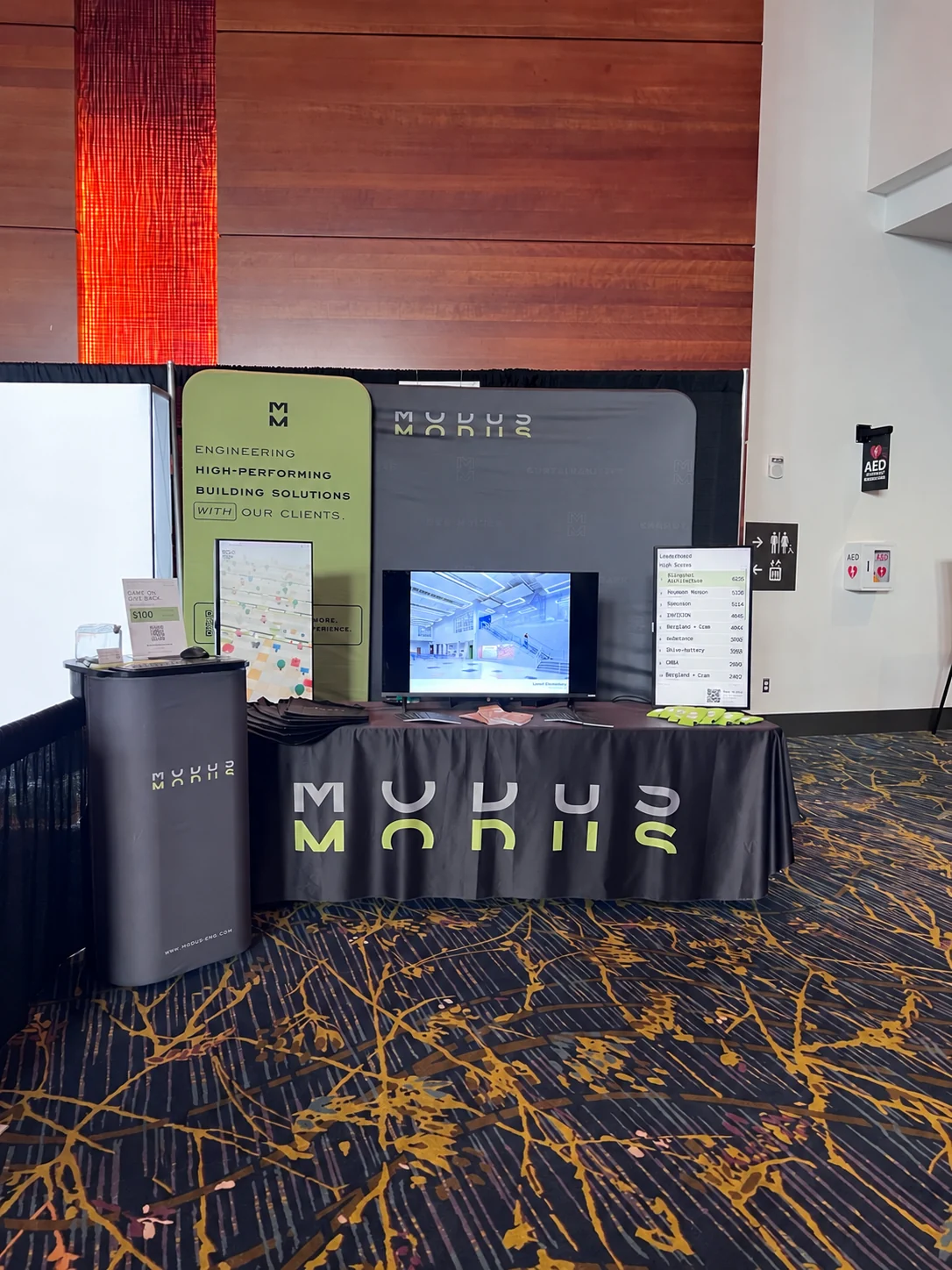
A visible game display connected the polo’s familiar graphics to the interactive world.
QR-code signage opened the browser-based game on a phone, without an app download.
The event leaderboard gave players a shared display for following the competition.
Keyboard and touch controls supported desktop and mobile play. The physical setup and the browser experience worked together, giving visitors a way to discover the game at the booth and continue on their own device.
The polo, the characters, the cultural icons, and the game all shared the same visual language. A detail someone noticed on a shirt could become a collectible on screen—and an opening for a conversation about MODUS.
The story keeps moving.
What started as a pattern on a polo became a way to explore MODUS through play. The connection is in the details: the same coffee cup, the same engineering tools, the same traditions, and the same people.
That is what MODUS Road brings to the screen—a little of what makes our team our team.